I Thought Fall Beans Was Just a Clone
I’ll be honest. When someone first recommended Fall Beans to me, my reaction wasn’t exactly enthusiastic.
My first thought was, “I’ve seen this before.” Bright colors? Check. Silly-looking characters? Check. Obstacle courses where everyone tries to reach the finish line before getting eliminated? Also check. So I expected to play a couple of matches, shrug, and move on.
Instead, I ended up spending most of my evening trying to squeeze in “just one more round.” That probably says more about the game than anything else I could write.
What surprised me wasn’t that Fall Beans has a familiar concept. It absolutely does. The surprise was how enjoyable it is once you’re actually playing. Sometimes a game doesn’t need to reinvent an entire genre. Sometimes it just needs to be genuinely fun, and I think that’s where Fall Beans succeeds.
The first thing I noticed was how quickly everything gets going. There’s no complicated setup, no lengthy tutorial trying to explain every mechanic, and no feeling that you’re being buried under dozens of menus before you even start. Within minutes, I was already running through obstacle courses alongside a crowd of other players.
Of course, I wasn’t exactly doing well.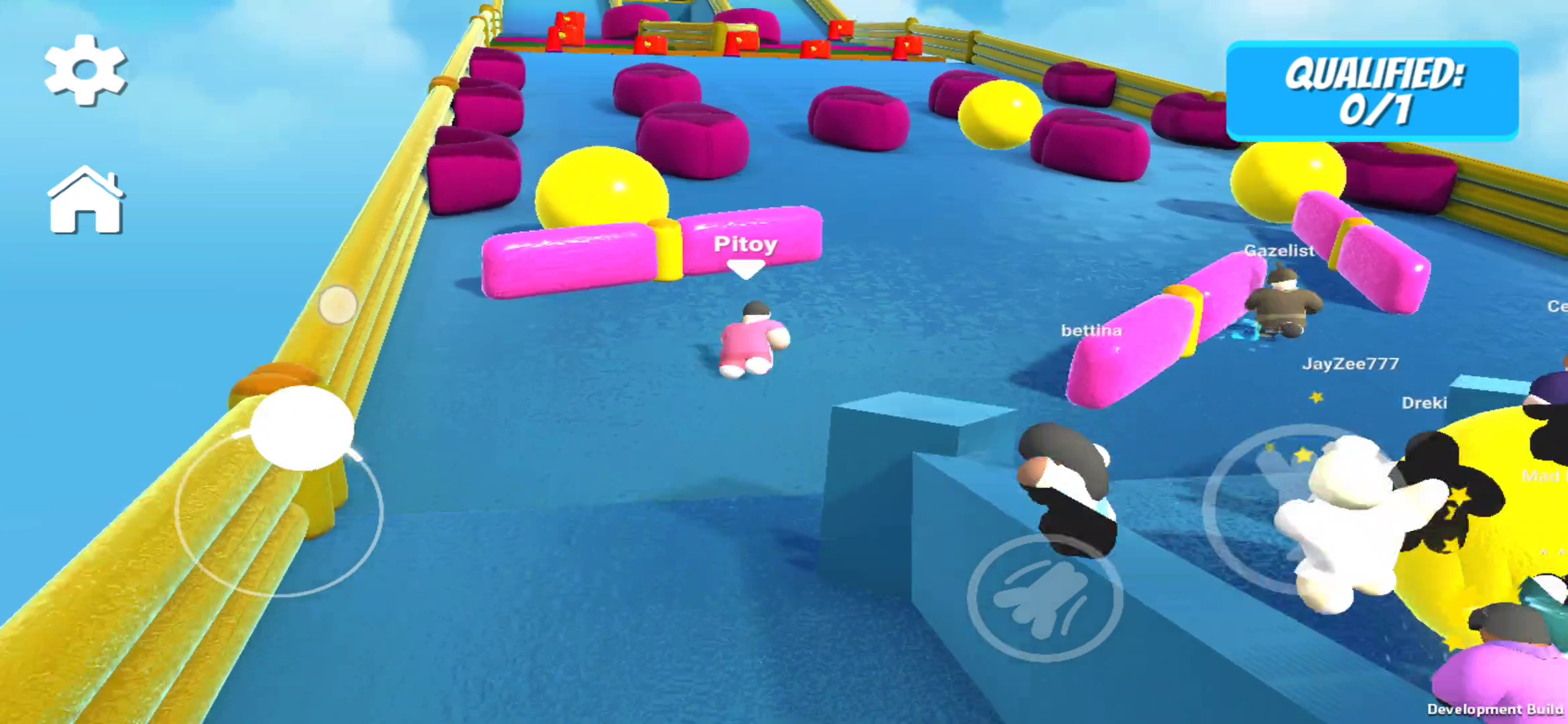
My first race was a disaster.
I missed jumps that looked incredibly easy, got launched by spinning obstacles, and somehow managed to fall into places I didn’t even realize were possible. If someone had been watching me, they probably would’ve wondered whether I’d ever played a platform game before.
The funny part is that I didn’t care.
Every failure looked ridiculous enough that I couldn’t help laughing. Watching my little bean character bounce around after getting smacked by a giant hammer never really stopped being funny.
That’s something I think Fall Beans gets right.
It understands that losing can still be entertaining.
A lot of competitive games make defeat feel frustrating. Here, even when things go completely wrong, the game has this lighthearted energy that keeps the mood relaxed. You lose, you smile, and a few seconds later you’re already loading into another match.
That quick turnaround makes a huge difference.
One thing I really appreciated was how approachable the controls are. They’re simple enough that almost anyone can understand them after a couple of minutes, but mastering the timing takes practice. That creates a nice balance where beginners can enjoy themselves without feeling overwhelmed, while experienced players still have room to improve.
I always enjoy games that reward consistency more than complicated mechanics.
You don’t need to memorize dozens of abilities or key combinations here. Most of the challenge comes from reading the course, reacting quickly, and staying calm when absolute chaos breaks out around you.
And trust me, chaos breaks out often.
One round I’d have a clear path ahead of me and feel like I was about to finish near the front. Then suddenly twenty other players would pile onto the same platform, everyone would start bumping into each other, and somehow we’d all end up falling together.
It sounds frustrating.
Somehow, it isn’t.
Those unpredictable moments are probably what make each match feel different. The obstacle courses stay familiar after a while, but the players constantly change the experience. Every lobby develops its own personality, and you never really know what’s about to happen.
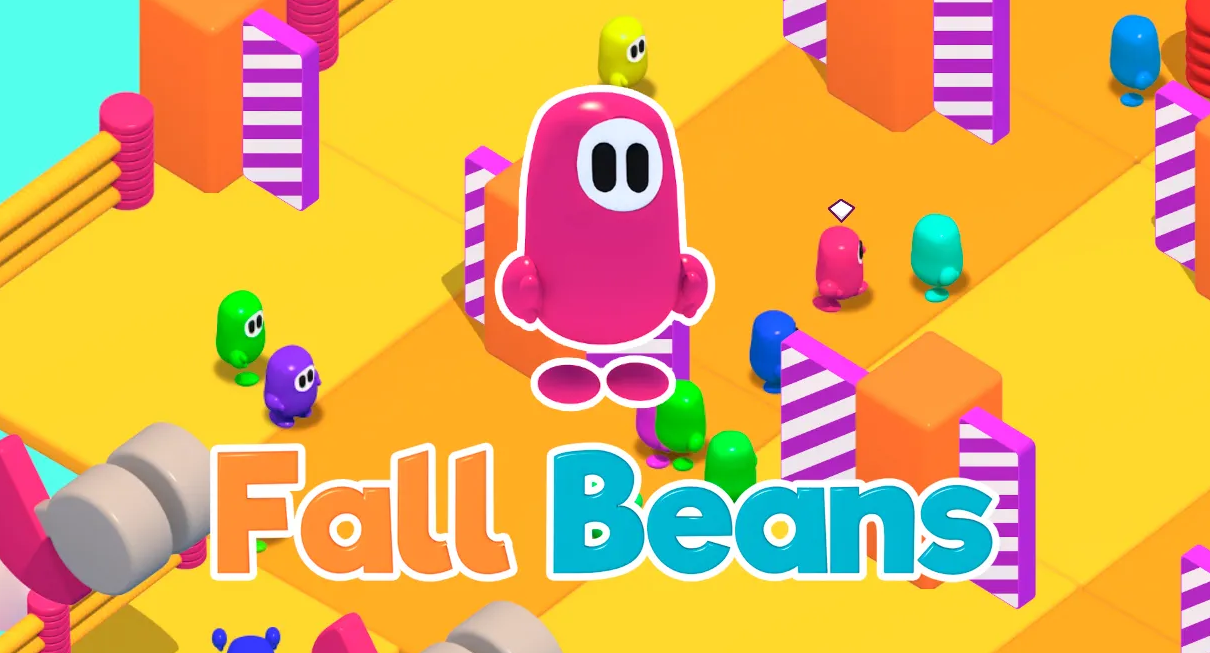
I also have to mention the visuals because they fit the game perfectly. They’re colorful without becoming overwhelming, and everything is easy to recognize while you’re running through the maps. Personally, I don’t think realistic graphics would improve this kind of game at all.
The cartoon style is part of its charm.
It creates an atmosphere where nobody expects perfection. You’re here to have fun, laugh at your mistakes, and hopefully make it to the finish line before everyone else.
If you don’t, there’s always another match waiting.
I found myself appreciating that more and more the longer I played. Modern multiplayer games sometimes feel like they’re asking for a long-term commitment. Daily challenges. Weekly objectives. Battle passes. Endless progression systems.
Fall Beans feels much lighter.
You can play for fifteen minutes during a break or spend an entire evening chasing victories. Either approach works because the game doesn’t pressure you into treating it like a second job.
That’s refreshing.
If I had one suggestion for the developers, I’d love to see an even bigger rotation of maps in the future. The existing courses are enjoyable, but adding fresh environments and new obstacle ideas regularly would keep longtime players guessing and make every session feel even more unpredictable.
That said, the current selection already provides plenty of variety, especially if you’re just starting out.
By the end of my first night with Fall Beans, I realized something kind of funny. I couldn’t even remember how many matches I’d won.
Normally I’d care about that.
Instead, I remembered all the ridiculous moments that happened along the way. The impossible recoveries. The accidental dives into nowhere. The times I thought victory was guaranteed right before a swinging obstacle reminded me otherwise.
Those memories stuck with me far more than the scoreboard ever did.
So, would I recommend Fall Beans?
Without hesitation.
If you’re looking for a multiplayer game that’s easy to understand, packed with personality, and doesn’t take itself too seriously, it’s absolutely worth trying. It’s competitive enough to keep you engaged, casual enough to help you relax, and unpredictable enough that every match has the potential to create a story you’ll laugh about afterward.
I started playing because I was curious.
I kept playing because I was having fun.
Honestly, that’s the simplest-and probably the best-recommendation I can give.